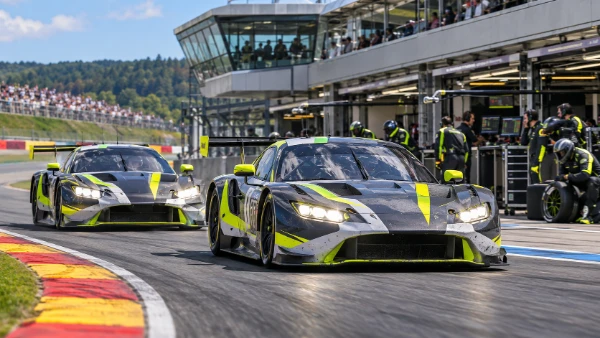
The FIA World Endurance Championship (WEC) has confirmed an important change to the LMGT3 teams’ standings for the 2027 season. From next year, points earned by two cars registered under the same competitor licence will be added together, replacing the existing system in which each car competes independently for the teams’ trophy. Announced on 20 October 2026 following a decision by the FIA World Motor Sport Council, the revision brings LMGT3 closer to the approach already used in the Hypercar manufacturers’ championship. The change does not introduce a completely new points scale. Instead, it alters how race results contribute to the overall team classification, making consistency across both cars a central part of the championship battle.
What Is Changing in the WEC LMGT3 Points System for 2027?
Under the rules used during 2026, each LMGT3 entry accumulated championship points according to its individual race number. Two cars operated by the same organisation could therefore occupy separate positions in the teams’ standings, even when sharing engineers, facilities and operational resources. A victory for one car would improve its own championship position without automatically strengthening the title challenge of its sister entry. From 2027, both nominated cars will contribute to a single combined points total, provided they meet the relevant entry requirements. The FIA Endurance Trophy for LMGT3 Teams will go to the eligible competitor whose two cars collectively score the most points throughout the season.
The distinction is important because the new regulations focus on the competitor licence rather than simply the manufacturer supplying the cars. Article 15.2 of the 2027 WEC Sporting Regulations establishes that the results of both cars entered under the relevant competitor licence count towards the LMGT3 teams’ trophy. Article 3.2.4 also addresses the designation of eligible entries, including circumstances in which a manufacturer nominates two cars under different licences belonging to the same company. Consequently, sharing a car manufacturer does not automatically mean that every entry using that manufacturer’s model will contribute to the same championship total. The official registration arrangements determine which cars are eligible to score together.
The FIA published the revised sporting regulations on 19 October 2026, with their application beginning on 1 January 2027. The announcement followed the autumn meeting of the World Motor Sport Council and was subsequently explained on the championship’s official website. The objective is to give greater weight to the performance of a complete two-car operation rather than rewarding one particularly successful entry. An organisation capable of regularly bringing both cars home in the points could gain a considerable advantage over a rival dependent on occasional victories. However, outright speed remains valuable, particularly at longer races where more championship points are available.
How the New LMGT3 Scoring Rules Work in Practice
The basic race points remain familiar. In a standard six-hour WEC race, the first ten classified LMGT3 cars receive 25, 18, 15, 12, 10, 8, 6, 4, 2 and 1 point respectively. Under the revised arrangements, a team whose cars finish first and fourth would earn 37 points towards its combined total. Another organisation finishing second and third would collect 33 points. This example illustrates why the finishing positions of both cars will matter: a team can potentially compensate for a disappointing result from one entry through a strong performance from the other. Points are awarded according to the applicable classification and championship eligibility rules, not simply the overall finishing position among Hypercars and GT cars.
The scoring scale increases for longer events. At eight-hour and ten-hour races, as well as the Qatar 1812km, victory is worth 38 points, followed by 27 for second and 23 for third. At the 24 Hours of Le Mans, those figures rise to 50, 36 and 30. The regulations also provide one additional point for pole position in each category, subject to the applicable qualifying and entry conditions. For example, two cars finishing first and third at Le Mans would contribute 80 race points to their team’s total, before any qualifying bonus. These larger rewards make the longest events especially influential in determining the final LMGT3 standings.
Importantly, the change concerns the teams’ classification rather than merging the results of different driver crews. Drivers continue to score points through the cars in which they compete, with the regulations providing separate recognition through the FIA Endurance Trophy for LMGT3 Drivers. A crew leading the drivers’ standings will not necessarily belong to the leading team, particularly if its sister car struggles to finish races. The distinction creates two different competitive stories within the same category: individual crews will pursue their own results, while team management must consider the collective contribution of both entries. Neither championship can be assessed accurately by looking at only one car’s performance.
Why the FIA Is Introducing Combined LMGT3 Team Points
LMGT3 became part of the WEC in 2024, replacing the former LMGTE Am category and bringing machinery based on internationally recognised GT3 regulations into the championship. The category features production-derived racing cars adapted for endurance competition, with manufacturers including Porsche, Ferrari, BMW, Aston Martin, Corvette, Lexus, Ford, McLaren and Mercedes-AMG represented during the 2026 campaign. Although these vehicles compete in the same events as the faster Hypercars, they have their own classification, trophies and sporting requirements. The new scoring arrangement reflects the established importance of two-car programmes while preserving the separate identity of LMGT3 competition.
One reason the revision matters is the different championship structure previously used for LMGT3 and Hypercar. In the latter category, the manufacturers’ title already takes account of results from two designated cars, rewarding an organisation’s ability to perform across multiple entries. LMGT3, however, continued to classify cars separately for the teams’ trophy. Bringing the methods closer together creates a more consistent way of recognising collective achievement across the WEC’s two main classes. It does not make the categories identical: Hypercar awards world championship titles, whereas the relevant LMGT3 honours remain FIA Endurance Trophies.
The 2026 championship provides a useful illustration of how competitive the individual-car format could be. Heading into the season-ending 6 Hours of Monza on 6–8 November, the title contenders identified by the championship included TF Sport’s number 33 Corvette, The Bend Manthey’s number 92 Porsche, Racing Team Turkey by TF’s number 34 Corvette and Team WRT’s number 69 BMW. These entries were competing as individual championship contenders rather than relying on the combined results of their respective two-car operations. Under the 2027 rules, a similar battle would need to be assessed using the complete eligible team results, potentially producing a significantly different championship order.
How the Changes Could Affect Leading GT3 Teams
For teams operating two competitive cars, the new structure creates a stronger incentive to deliver balanced performances. Consider a hypothetical Porsche operation finishing second and fifth in a six-hour race. Its combined score would be 28 points. A rival BMW operation taking victory but failing to finish its second car in a points-paying position would collect only 25 race points. The BMW would have won the race, yet the Porsche organisation would leave with a greater contribution to the teams’ standings. This does not reduce the importance of winning; it shows that consistency, reliable equipment and effective decisions across both entries can outweigh an isolated success.
The consequences could be particularly noticeable for organisations such as Team WRT, TF Sport, Manthey-related operations and other established GT3 competitors. Running two cars introduces practical challenges involving pit stops, tyre choices, driver rotations and the management of unexpected problems. A technical failure or penalty affecting either entry can reduce the combined championship score, while a strong recovery drive may rescue valuable points. Teams may therefore place greater emphasis on finishing races with both cars rather than taking excessive risks for a marginal position. Nevertheless, such decisions will depend on the race situation, points available and championship standings at the time.
The regulations also make the formal designation of entries especially relevant. Manufacturers and competitors must establish which cars are eligible to contribute to the LMGT3 teams’ trophy, with the sporting rules specifying that these designations apply throughout the season. This prevents the championship from becoming a simple comparison of every car carrying the same manufacturer badge. It also highlights why the final 2027 entry list will matter when assessing potential title contenders. The strongest manufacturer presence will not necessarily translate into the strongest individual competitor, and established names should not be treated as confirmed participants until the relevant entries have been officially accepted.

What the 2027 WEC Rules Mean for the Championship Battle
The revised classification is likely to make consistency a more prominent factor throughout the season. In endurance racing, mechanical reliability, changing weather and incidents involving traffic can produce substantial differences between cars that appear evenly matched on outright pace. With two results contributing to one championship score, a poor weekend for either entry becomes more significant to the overall team campaign. Conversely, a squad that repeatedly secures two solid finishes may remain competitive without winning as frequently as its rivals. This could create closer title battles between teams using different approaches, although the eventual effect will depend on the quality and reliability of the cars entered.
The confirmed 2027 WEC calendar contains nine rounds, expanding the championship and bringing Silverstone back to the schedule. The season is planned to begin with the Qatar 1812km on 27 March, followed by races at Imola on 11 April, Silverstone on 25 April and Spa-Francorchamps on 15 May. The 24 Hours of Le Mans is scheduled for 12–13 June, before subsequent visits to São Paulo on 11 July, Circuit of the Americas on 12 September and Fuji on 26 September. Bahrain hosts the final round on 6 November. Across this varied calendar, teams will encounter different circuits, race lengths and conditions, creating several opportunities for the combined scoring system to influence the standings.
Le Mans is particularly important because of its double-points allocation compared with standard six-hour races. A team whose cars finish first and second there would receive 86 race points, while two entries finishing fifth and sixth would still provide 36. In a six-hour event, those same combinations would produce 43 and 18 points respectively. The larger potential gains and losses at Le Mans mean that one exceptional weekend could significantly reshape the championship table. However, a successful Le Mans result alone will not guarantee the teams’ trophy, especially with eight other rounds contributing to the final classification.
What Fans and Motorsport Bettors Should Watch in 2027
For spectators following the championship, the most useful change will be to examine the combined results of both cars instead of concentrating exclusively on race winners. A team could lead the standings despite having fewer outright victories than a rival, simply because its second entry regularly finishes higher. The gap between the two cars within an organisation may become an important indicator of championship strength. Qualifying performance, reliability across previous races and results at comparable circuits can provide additional context, although no single statistic offers a reliable prediction of the outcome of a six-hour or 24-hour endurance race.
For anyone considering motorsport betting, the distinction between a race result and a season-long team classification is essential. A market covering the winner of an individual LMGT3 race is not necessarily affected in the same way as a market covering the FIA Endurance Trophy for LMGT3 Teams. Bookmakers may apply their own settlement terms, and the availability of WEC markets varies by operator and jurisdiction. Before placing a wager, it is important to check which competitor is named, whether the market concerns a single car or an eligible two-car operation, and how subsequent penalties or official classification changes are handled. Previous seasons’ individual-car standings should not be treated as direct forecasts for the revised 2027 trophy.
As of November 2026, the central change is confirmed: the 2027 LMGT3 teams’ classification will combine the championship points earned by two designated cars rather than treating their results independently. The FIA has also published the corresponding sporting regulations and points allocations, establishing the framework before the new season begins. What remains uncertain is how individual competitors will perform under those rules, particularly as the final entry arrangements and competitive balance for 2027 take shape. The revised system puts a straightforward endurance-racing principle at the centre of the title contest: success over a full season will depend not just on producing one outstanding car, but on delivering competitive results with both.